Overview
Neuroscience has entered an exciting stage where large-scale data are routinely collected, including animal behavioral data, population neural recordings, and connectomics data. However, efficiently analyzing these datasets and extracting meaningful insights has become a major bottleneck. We aim to tackle these challenges using modern data science and machine learning tools.
1. Develop analysis pipelines for animal behavioral videos
In recent years, many neuroscientists have been recording videos of animals in both head-fixed and freely moving conditions. While this gives researchers the opportunity to capture a rich set of behaviors, extracting meaningful structures from high-dimensional videos can be challenging.
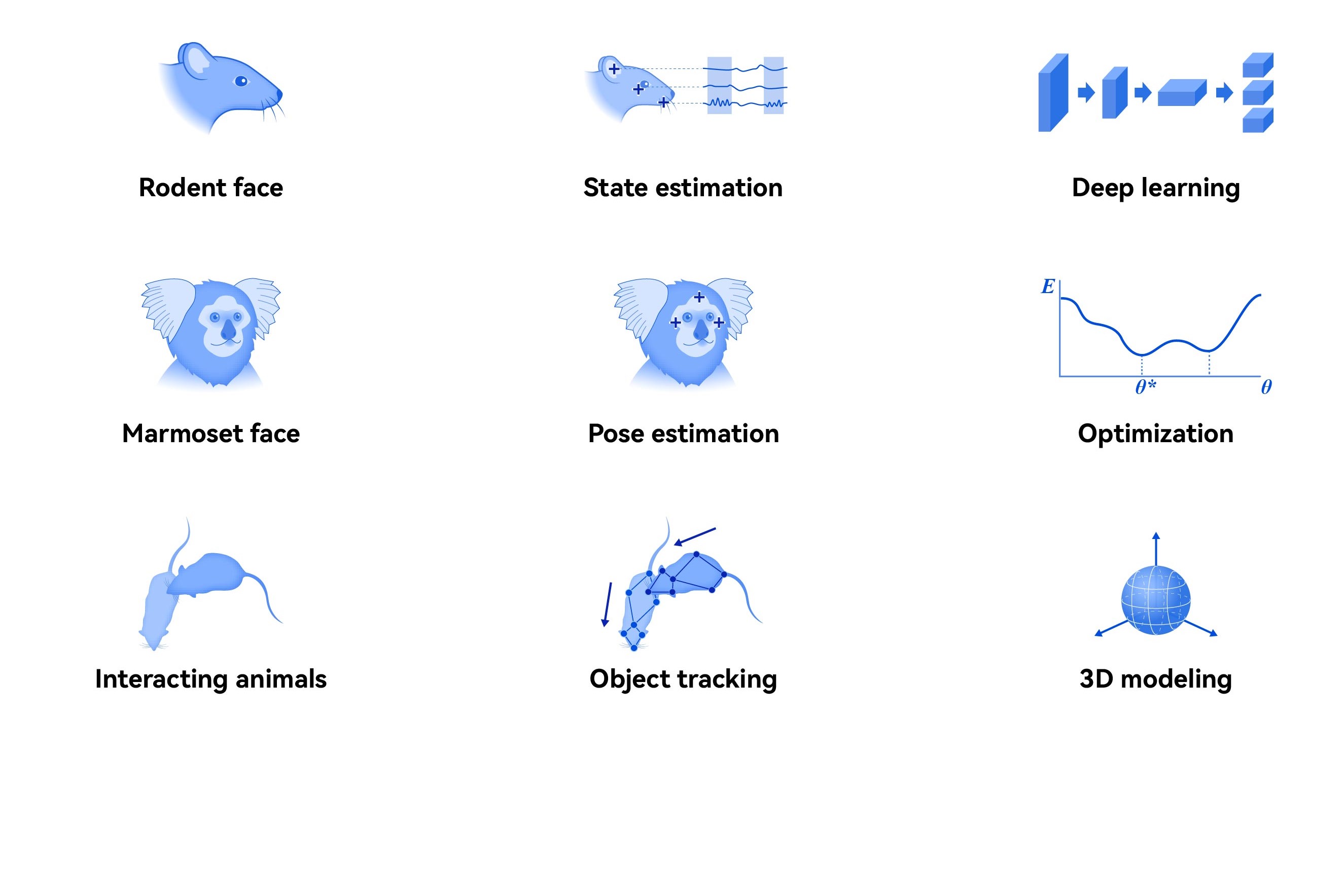
We are collaborating with multiple labs at CIBR to test and develop analysis pipelines that can process videos in a high-throughput manner to address biological questions. Currently, we are particularly interested in analyzing facial videos of rodents and non-human primates to better understand their emotional states.
Due to the complex nature of the data and the diversity of computer vision tasks (such as image and video classification, keypoint detection, pose estimation, and object detection & tracking), we often need to combine multiple approaches. We use deep learning alongside traditional computer vision techniques, 3D modeling, and numerical optimization.
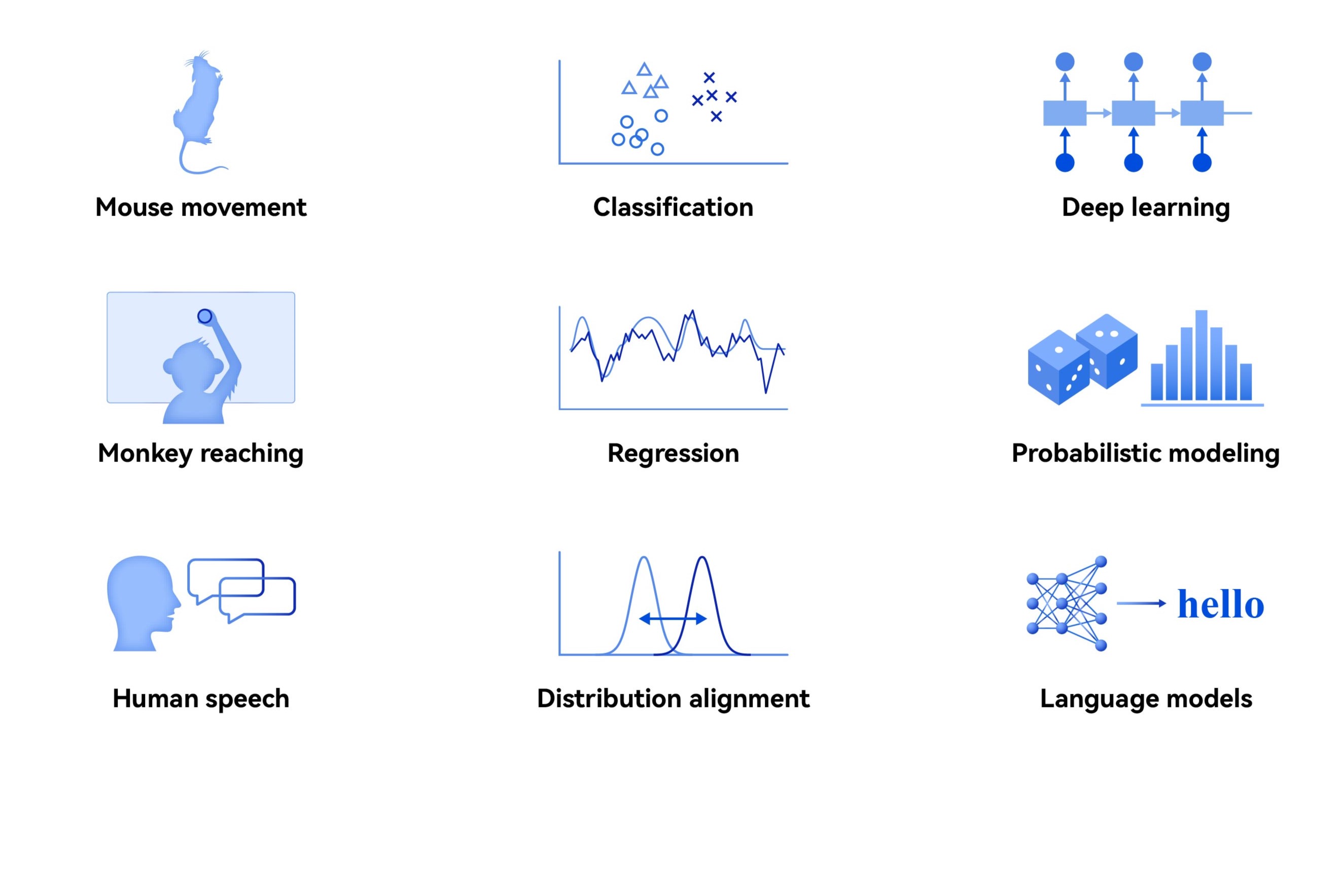
Due to technological development, the number of neurons that can be recorded simultaneously is growing every year. However, there's room for improvement in developing robust decoding methods to extract useful information from these large-scale neural population recordings. Our lab is focusing on testing and developing neural decoding algorithms related to brain-machine interfaces. Some key questions we're exploring are:
• How can we best utilize the different characteristics of neural data (Ca imaging, spikes, ECoG, EEG)?
• How can we develop decoding methods that generalize across participants?
• How can we make decoders adaptive to reduce calibration time?
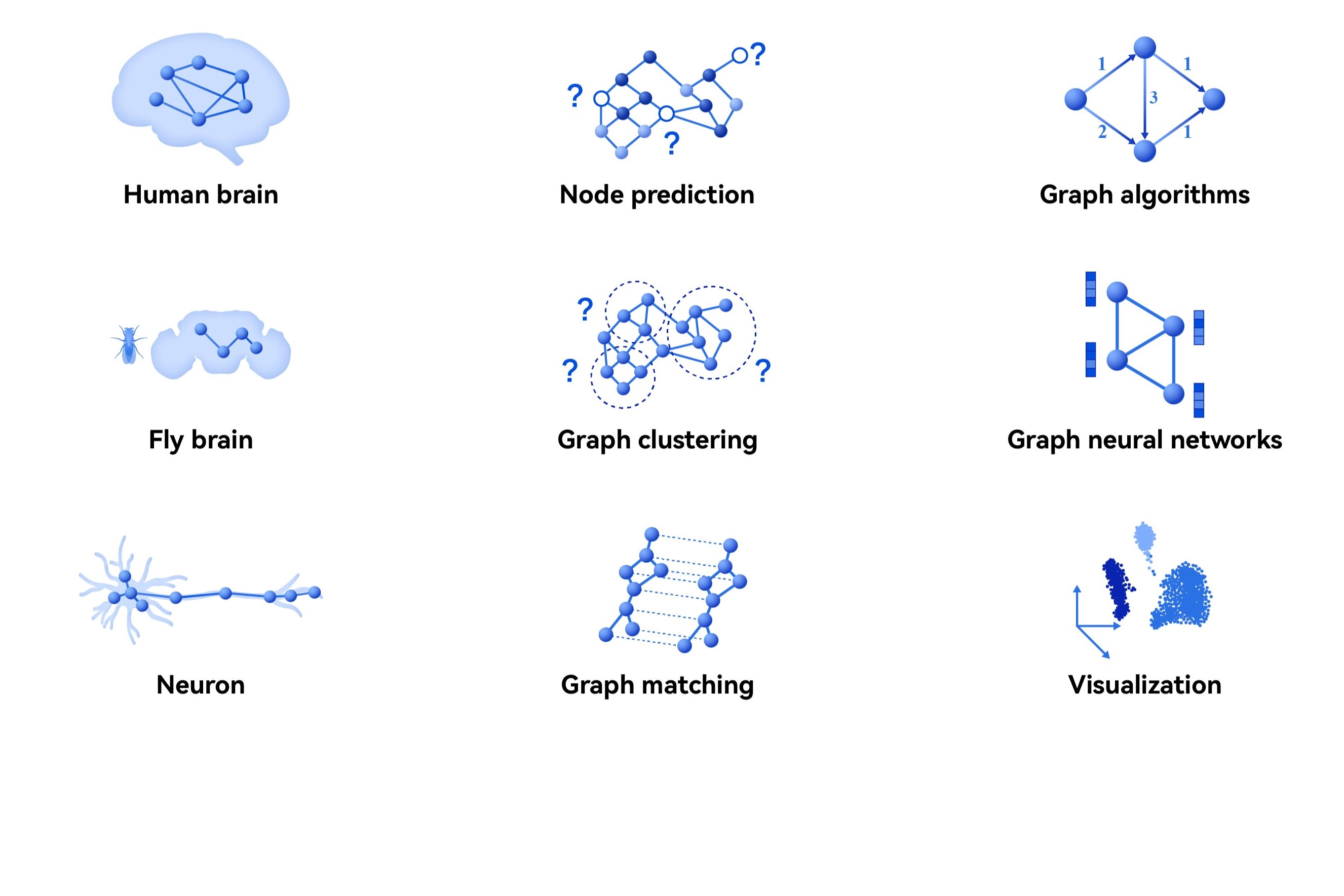
Neuroscience data comes in many different forms. While deep learning for computer vision and natural language processing have been highly successful, we need more methods that can handle complicated data strucutres, such as neural connectivity data and complex time series data.
We are currently using Graph Neural Networks (GNN), a neural network specialized for handling graph data, to learn complex nonlinear structures from connectome data. For example, we have applied GNN to predict functional connectivity from structural connectivity in humans (in collaboration with Zaixu Cui lab at CIBR). We are also analyzing the brain connectivity of model organisms, including the fruit fly (the biggest synapse-level connectome to date).
We are also interested in testing advanced time series models on neuroscience data. For example, there has been a rapid progress in the field of deep state-space models, which are good at handling long-range temporal dependencies. We are curious to test their effectiveness in modeling neuroscience data and to explore whether they could be used to improve the decoding performance.
 TOP
TOP